

 Contact Us
Comfort Lens


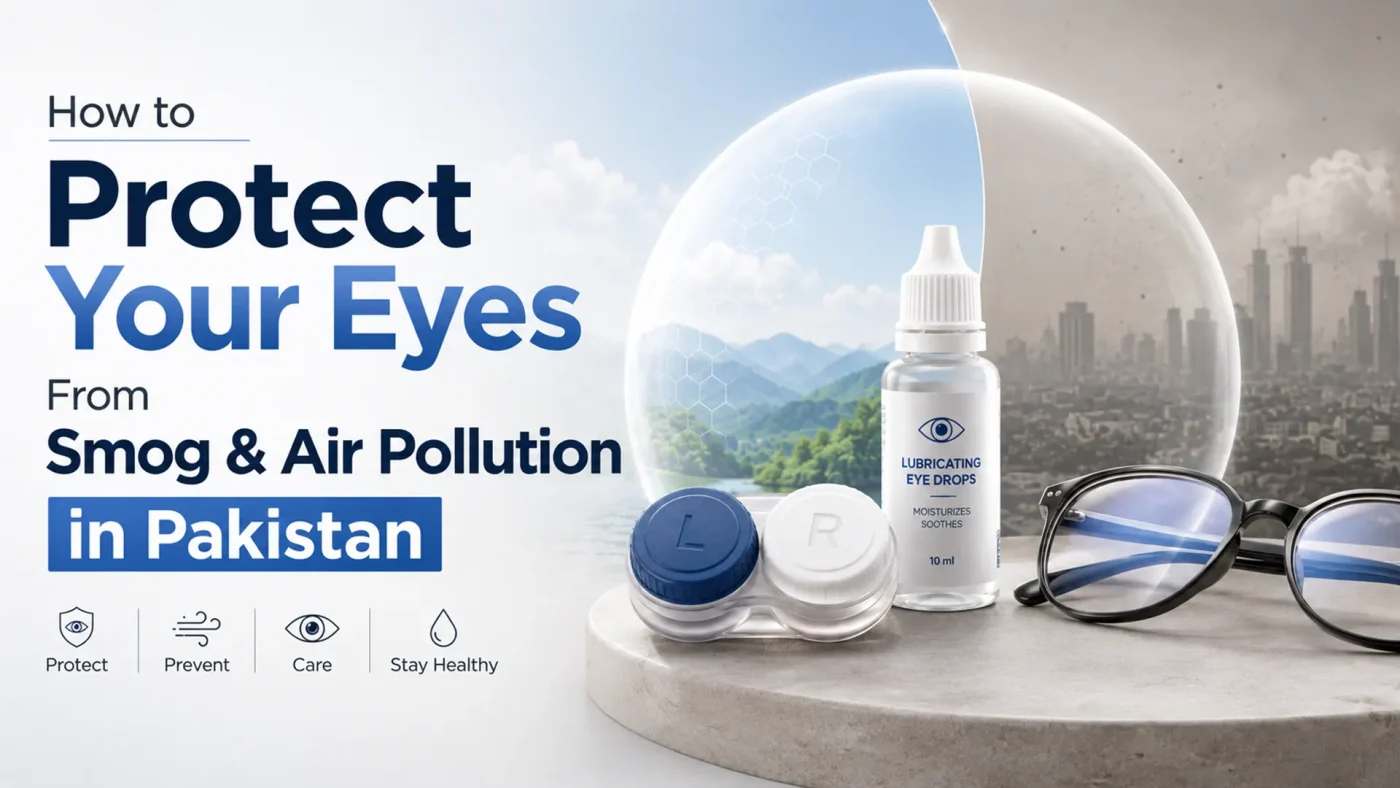
Step outside in Lahore on a November morning, and you can feel it before you see it. The air sits heavy. A grey haze covers the skyline. Within minutes, your eyes start to water. By the time you reach your destination, they are red, stinging, and tired, and the day has barely started.
This happens to millions of people across Pakistan every single winter. Lahore, Karachi, Multan, and Islamabad all experience periods of severe air pollution, with the AQI climbing past 200 and sometimes past 300 for days at a time. At those levels, the air is not just unpleasant. It is actively damaging to your eyes, your lungs, and your long-term health.
The good news is that protecting your eyes from pollution does not require dramatic lifestyle changes. It requires understanding what is actually happening to your eyes, and then building a few simple habits that make a real difference across an entire season.
This guide covers all of it, from what smog does to your eyes at a biological level, to practical daily steps, to what contact lens wearers specifically need to do differently during poor AQI periods in Pakistan.
Most people think of smog as something that affects breathing. What they do not realise is that your eyes are equally exposed and, in some ways, more vulnerable, because they have no passive filter like your nose.
When AQI levels rise above 150, the concentration of PM2.5 particles in the air fine particulate matter smaller than 2.5 micrometres increases sharply. These particles are small enough to land directly on the surface of the eye and embed themselves into the tear film, the thin protective layer that keeps your cornea clean and lubricated.
Once the tear film is disrupted, several things happen simultaneously. Your eyes try to flush the irritants out by producing more tears, which is why your eyes water constantly on high-pollution days. The surface of the eye becomes inflamed. The conjunctiva, the clear tissue covering the white of your eye, turns red and swollen. And over time, repeated exposure thins the tear film itself, making your eyes chronically dry and more vulnerable to infection.
Poor AQI eyes are not a minor inconvenience. For people with existing eye conditions like dry eye syndrome, blepharitis, or allergic conjunctivitis, heavy pollution can trigger significant flare-ups that take weeks to settle.
Lahore’s smog is not simply dust. It is a chemical mixture of vehicle exhaust, industrial emissions, crop burning from surrounding agricultural areas, and construction dust, all combining in cold winter air that traps pollutants close to the ground instead of dispersing them upward.
This combination is particularly harsh on the eyes because it includes not just particulate matter but also nitrogen dioxide and sulphur dioxide, both of which dissolve in the moisture on the eye surface and form mild acids that cause chemical irritation on top of physical irritation from the particles themselves.
When Lahore’s AQI crosses 300, which it does multiple times between October and January, outdoor exposure for even thirty minutes can cause noticeable smog eye irritation in people who would otherwise have healthy eyes. For contact lens wearers, the threshold for discomfort is even lower.
Physical protection is your first and most effective line of defence. Wraparound sunglasses or close-fitting prescription glasses create a barrier that significantly reduces the volume of particles reaching your eye surface. They do not eliminate exposure entirely, but they reduce it enough to make a meaningful difference across a full day.
Every time you come inside after spending time in polluted air, rinse your eyes gently with clean, room-temperature water. Lean over a sink, cup clean water in your palms, and blink your eyes open into it several times. This removes surface particles before they have time to cause prolonged irritation.
The one thing to avoid here is rubbing. When your eyes are irritated, rubbing feels like relief, but it pushes particles further across the eye surface and can cause micro-scratches on the cornea that become entry points for infection.
Pollution strips moisture from the eye surface. Preservative-free lubricating drops replace that moisture and help flush remaining particles from the tear film. Use them when your eyes feel dry or gritty after outdoor exposure, and keep a small bottle with you through the smog season.
The preservative-free distinction matters. Regular eye drops contain preservatives that are fine for occasional use but can cause rebound dryness and chemical sensitivity if you are using drops multiple times a day over several weeks, which is exactly what smog season often requires.
AQI readings change hour by hour. Apps like IQAir and AirVisual give real-time readings for Lahore, Karachi, Islamabad, and Multan. Checking before you go out takes thirty seconds and tells you whether you need to take extra precautions, limit your time outside, or adjust your plans entirely.
AQI below 100: moderate caution for sensitive individuals. AQI above 200 minimises outdoor time, keep windows closed, and use an air purifier indoors if available. AQI above 300 stay indoors where possible, especially for children and anyone with existing eye or respiratory conditions.
Beyond hydration, certain nutrients directly support eye resilience against environmental stress. Omega-3 fatty acids — found in fish, walnuts, and flaxseed — support tear film stability and reduce inflammation. Vitamin A, found in carrots, eggs, and leafy greens, maintains the health of the corneal surface. Vitamin C and Vitamin E are antioxidants that protect eye tissue from oxidative damage caused by pollutants. During smog season, making these a consistent part of your diet gives your eyes a genuine advantage from the inside out.
If you wear contact lenses for smog season requires a specific set of adjustments. Lenses sit directly on the corneal surface, which means particles trapped beneath a lens create friction against the eye with every blink. Over a full day of high-pollution exposure, that friction adds up.
Daily disposable lenses are the safest and most practical choice during poor AQI periods. Because you discard them every evening, there is no accumulation of pollution particles, protein deposits, or irritants on the lens surface. Every morning, you start fresh. The risk of infection, irritation, and corneal abrasion drops significantly compared to wearing monthly or bi-weekly lenses through smog season.
At Eyelenses, we carry a wide range of daily disposable lenses across different prescriptions and wearing needs. If you have been wearing monthly lenses year-round, switching to dailies just for the October to February smog period is one of the most effective changes you can make for your eye health.
Wash your hands thoroughly before touching your lenses more thoroughly than you would at other times of the year, because your hands carry more environmental pollutants during smog season. Use a fresh solution every time you store lenses. Never top up the old solution in a case; empty it completely, rinse with fresh solution, and refill.
Sleeping in contact lenses reduces corneal oxygen supply at the best of times. During smog season, when your eyes are already inflamed and under stress from pollution exposure, the risk of corneal infection increases sharply. Remove lenses every evening without exception, no matter how tired you are, no matter how short the nap.
Transparent contact lenses are the most practical choice for lens wearers during smog season. Unlike colored lenses, transparent lenses have a thinner profile that sits more comfortably on an already-irritated eye surface. They allow maximum oxygen flow to the cornea, which is important when your eyes are under additional stress from pollution exposure.
For vision correction during high-AQI days, transparent daily disposables are the ideal combination — clear optics, fresh lens every day, and no accumulated irritants. At Eyelenses.pk, transparent options are available across multiple brands, including Bella Clear Vision, Optiano Clear Vision, Comfort Transparent, and Freshkon Transparent — all available with prescription and zero power options.
Many people assume that once they are indoors, their eyes are safe. In Pakistani cities during heavy smog periods, this is only partially true. Pollutants enter through windows, doors, and ventilation, and indoor air quality can remain poor even when you are not going outside.
Keep windows closed on high-AQI days. Use a HEPA air purifier in the rooms where you spend the most time, particularly the bedroom, since your eyes are most vulnerable and least defended during sleep. Avoid using ceiling fans that recirculate settled dust back into the air. Wipe surfaces regularly to reduce the indoor particle load.
If you use air conditioning, clean the filters before the start of winter. Dirty AC filters push accumulated dust and pollutants directly into your breathing and living space throughout the season.
Most smog-related eye irritation settles once you are away from polluted air and have rinsed your eyes. Some symptoms, however, indicate something more serious that needs medical attention:
If you experience any of these, remove your contact lenses immediately if you are wearing them and see an eye specialist the same day. Do not continue wearing lenses through these symptoms, and do not self-treat with over-the-counter drops alone.
The best way to protect your eyes from pollution is consistency. Not any single dramatic intervention, just a set of small daily habits repeated throughout the season.
That is genuinely it. These habits, done consistently across the October to February smog window, make a measurable difference to your eye health, your comfort, and your long-term vision.
At Eyelenses, everything you need for the season is in one place: daily disposable lenses, lens accessories, trusted brands including Optiano Clear Vision, Dress Your Eye Daily, and Bella Clear Vision, and fast delivery across Pakistan. Take care of your eyes before the smog settles in.






 Blue Lenses
 Brown Lenses
 Golden Lenses
 Gray Lenses
 Green Lenses
 Hazel lenses
 Purple Lenses
 Yellow Lenses
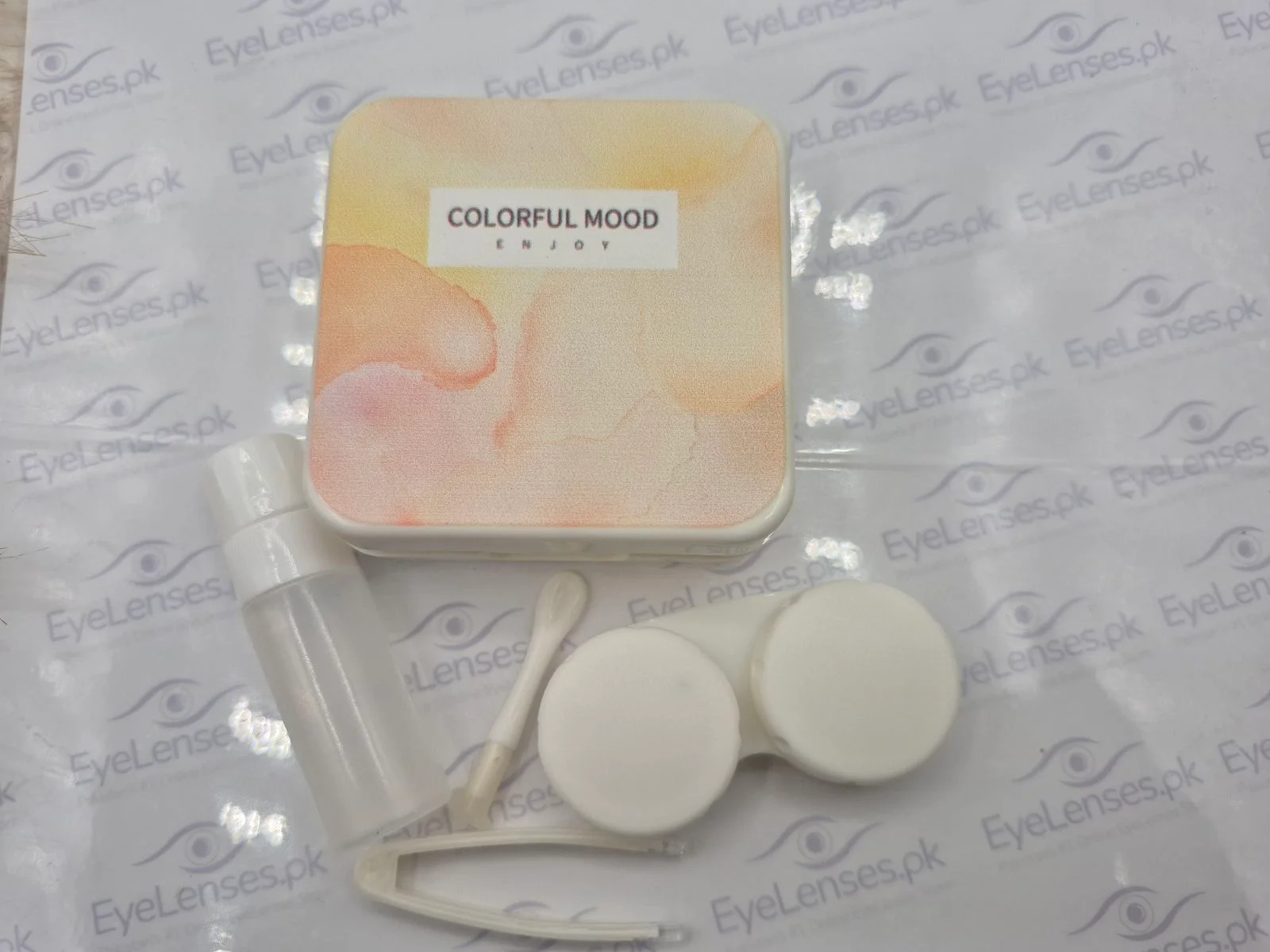 LENS SET CASING


